
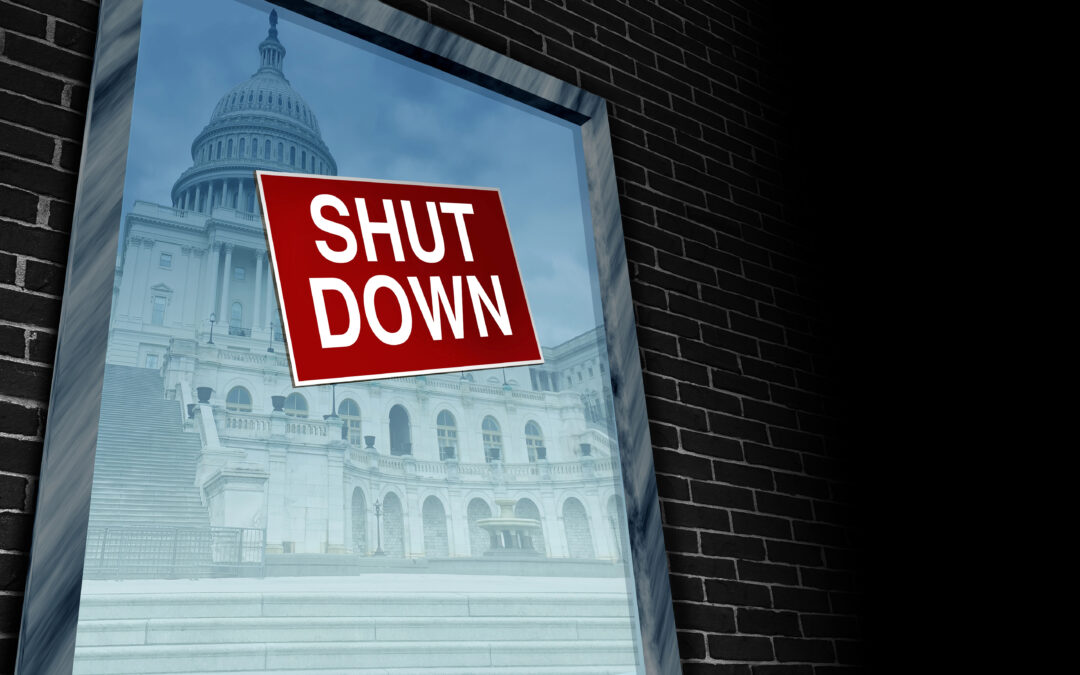
Every time Congress fails to pass a budget, real people pay the price. TSA officers show up to work, screen millions of passengers, and keep our skies safe — without a paycheck. Border agents, FEMA staff, and countless DHS employees do the same. These are not abstract line items in a federal ledger. They are working Americans with mortgages and families, and they are being used as leverage in a political standoff they had no part in creating.
The mechanism that enables this is straightforward: funding appropriations are set to expire on specific dates, giving Congress a recurring deadline it can — and routinely does — fail to meet. When it fails, essential government functions don't pause. They continue, staffed by workers who are legally required to show up and legally prohibited from being paid on time. That is a structural flaw, not a partisan one. And it has a structural solution.
What makes this particularly galling is the double standard embedded in it. Every private employer in America is legally required to pay their workers on time. Miss payroll and you face fines, back pay penalties, civil lawsuits, and in egregious cases, criminal charges. The same applies to businesses that fail to pay their debts — creditors have legal recourse, courts have jurisdiction, and consequences follow. But when the federal government fails to pay the people who work for it, there is no equivalent accountability. No penalty. No fine. No judge to answer to. The doctrine of sovereign immunity — the legal principle that the government cannot be sued without its own consent — shields Congress from the very consequences it would impose on any business owner who tried the same thing. We hold individuals and companies to a clear legal and moral standard: you must pay what you owe, on time, or face the law. The government exempts itself from that standard entirely. That is not a democratic principle. It is the logic of a ruling class — one that writes rules for everyone else while placing itself above them.
There are two credible paths to fixing it. Either one would work. Ideally, neither would ever need to be used.
Option 1: Remove the Cliff
The simpler and more immediately practical fix is a constitutional amendment establishing that when Congress fails to pass new appropriations before existing ones expire, the previous funding levels remain in place automatically — a permanent continuing resolution — until new legislation is enacted.
This eliminates the shutdown mechanism entirely. There is no cliff. There is no leverage. There is no hostage situation. Lawmakers could still negotiate, still debate spending priorities, and still pass new budgets. They would simply lose the ability to use a funding deadline as a weapon.
This is not an untested concept. Many state governments operate under similar frameworks. Businesses routinely extend contracts on existing terms while renegotiating new ones. There is no principled reason the federal government should operate differently. The only reason to oppose this amendment is if you benefit from the current dysfunction — which is a pretty good indication of exactly why it needs to pass.
This reform is clean, limited in scope, and does not alter the fundamental balance of power between branches. Congress retains full control of the purse. It simply loses the option to weaponize the expiration date.
Option 2: Consequences for Failure
If Congress is unwilling to adopt the simpler fix, there is a harder one.
A second constitutional amendment would establish that when Congress fails to deliver funding appropriations for more than 30 days past their expiration, Congress is dissolved, temporary executive authority transfers to the President, and elections for a new Congress are triggered immediately.
This proposal will generate objections, and some of them are worth taking seriously. Concentrating executive power — even temporarily — carries genuine constitutional risk, and the Founders were right to be cautious about it. This is not a reform to pursue lightly.
But consider the alternative we already live with: a Congress that faces no meaningful consequence for failing to perform its most basic function, while the workers who actually run the government absorb the cost. At least under this framework, the deterrent is real. The threat of dissolution would focus legislative attention considerably. And because the transfer of authority is time-limited and immediately followed by new elections, democratic accountability remains intact.
This is not the preferred solution. It is the solution you reach when the preferred one is refused.
The Bottom Line
The Founders gave Congress the power of the purse because they believed lawmakers would take governing seriously. Too many of them no longer do. The men and women of the TSA — and every other federal agency — deserve a Congress that shows up and does its job.
Option 1 is the rational path: remove the mechanism that makes shutdowns possible. Option 2 is the deterrent: make the cost of failure high enough that failure stops being an option. Pick one. Pass it. And stop making essential workers pay for Congress's dysfunction.


Üsküdar Duvar İçi Su Kaçağı Tespiti Dijital ödeme seçenekleri mevcut, çok modern. https://boonbac.com/read-blog/2469
Backbiome is a naturally crafted, research-backed daily supplement formulated to gently relieve back tension and soothe sciatic discomfort.
Backbiome is a naturally crafted, research-backed daily supplement formulated to gently relieve back tension and soothe sciatic discomfort.
Nice post. I learn something totally new and challenging on websites